

Gateway and traffic management
One entry point for REST and SOAP traffic, with routing, TLS termination, payload size limits, and rate limiting and throttling set per consumer rather than per estate.
HomeCapabilitiesSolutionsAPI Management
Digital Connectivity
Every real-time integration in the estate eventually becomes an API: a mobile app asking for stock, a partner checking an order status, a marketplace pushing a price change. FORTE Technologies designs, builds and runs that API layer — gateway, security, documentation and the operations that keep it answering.
APIs sit on the same managed connectivity platform as the rest of Digital Connectivity, with the Quadrant integration stack behind them, so an API that exposes ERP data reuses mapping and transformation that already exist rather than adding another set of bespoke endpoints somebody has to maintain.
We work specification-first. The OpenAPI definition is written and reviewed with the teams that will call it before the code exists, then used to generate portal documentation, client stubs and gateway configuration. REST is the default; SOAP endpoints stay where an ERP module or a trading partner still requires them, fronted by the same gateway so authentication and logging are handled the same way.
Internal and partner APIs are separated deliberately. Service-to-service calls inside the network use OAuth2 client credentials or mTLS; partner-facing APIs get their own gateway route, their own credentials, per-consumer rate limits and quotas, and a developer portal with sandbox access so a partner can test against a real contract before go-live.
Talk to Us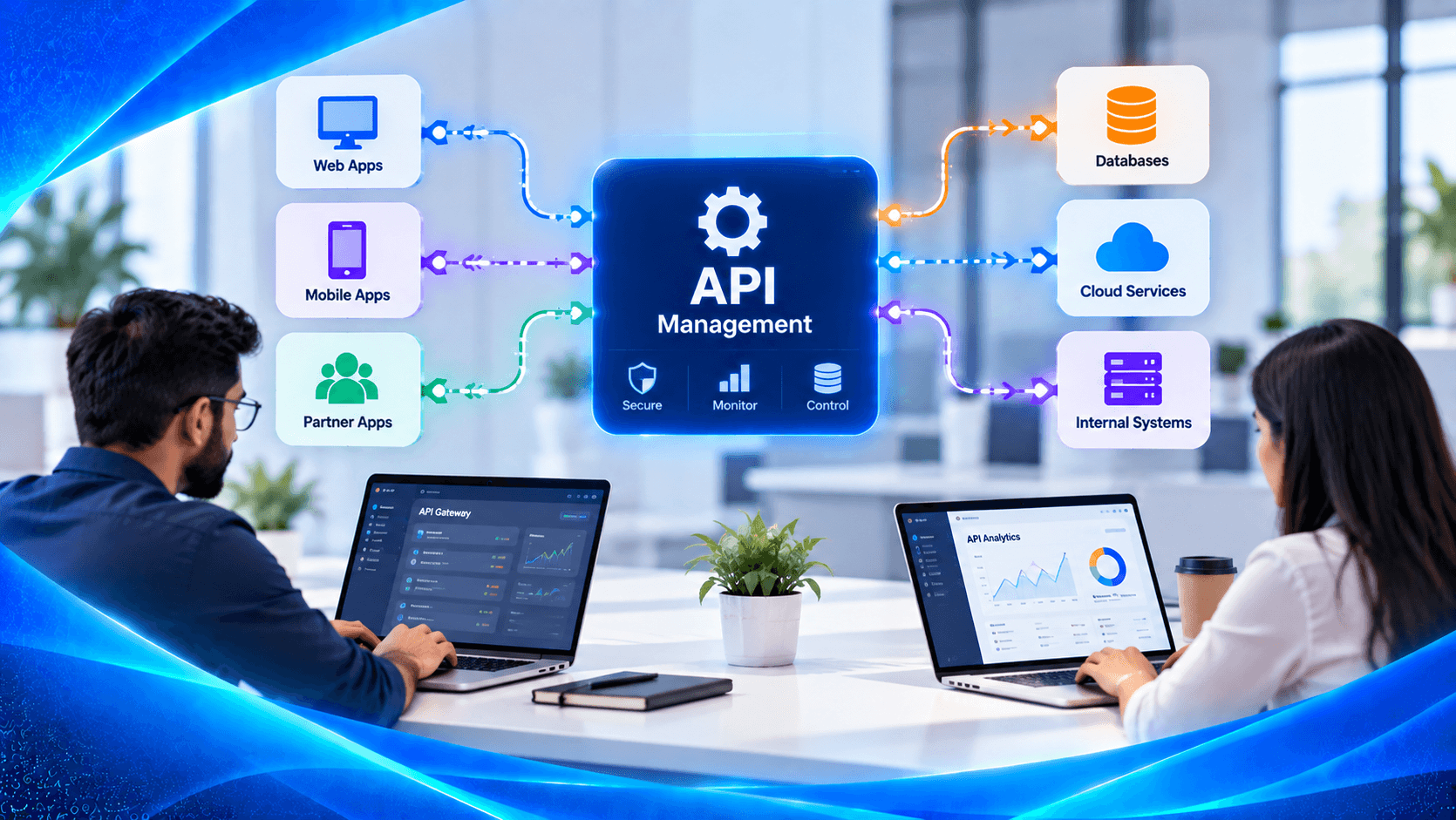
Solution
Every published API sits behind one gateway, so authentication, rate limiting, logging and version routing are applied in one place instead of re-implemented in each service.
An OpenAPI specification for every endpoint, published to a developer portal with sandbox credentials, so a consuming team or partner can integrate without waiting on a call.
Versioning with a stated deprecation policy: old versions run alongside new ones for an agreed window, with per-consumer usage data showing exactly who still has to move.
Modules
What We Deliver
One entry point for REST and SOAP traffic, with routing, TLS termination, payload size limits, and rate limiting and throttling set per consumer rather than per estate.
OAuth2 client credentials and authorisation code flows, API keys for low-risk read endpoints, mTLS for partner connections, and scope-based access checked at the operation level.
OpenAPI-first design, versioned endpoints, a published deprecation policy with agreed notice windows, and specification changes reviewed before they reach a consumer.
Published documentation, sandbox credentials and self-service onboarding, with call volumes, latency, error rates and quota consumption reported per consumer and per endpoint.
Outcomes
We measure success by the impact we create. Here's what good looks like when API Management is running the way it should.
Request a ConsultationOAuth2, API keys and mTLS sit behind one gateway, so every call is authenticated and logged in one place.
An OpenAPI specification and sandbox credentials let a partner integrate without waiting on a call.
Per-consumer rate limiting and quotas stop one caller from overloading the systems behind the gateway.
Deprecated versions run alongside new ones for an agreed window, with usage data showing who still has to move.
Related
Let's talk
Tell us what you are trying to achieve. We will bring together the right capability, technology and delivery model to help move it forward.